Social Mobilization is at the heart of everything we do. Wherever GAAP works, whether expanding its regular core programme, implementing donor-funded projects, or responding to disasters, the principles and practices of social mobilization remain the same. These are: establishing mutual trust; understanding that there are mutual rights and responsibilities related to accountability and transparency; observing the principle of benefitting the community at large, rather than individuals, and ensuring that the poorest and most vulnerable people are included in the programming.
We work with rural men and women to release their potential abilities and skills so as to build their knowledge and enable them decide their own development priorities. We also help people to find the resources they need to meet their identified needs. The purpose is to break the cycle of poverty, both economic poverty and ‘poverty of opportunity’. When community members come together for a common purpose – which is ultimately village wide socio-economic development – they are in a stronger position to bring about sustainable improvements in the quality of life.
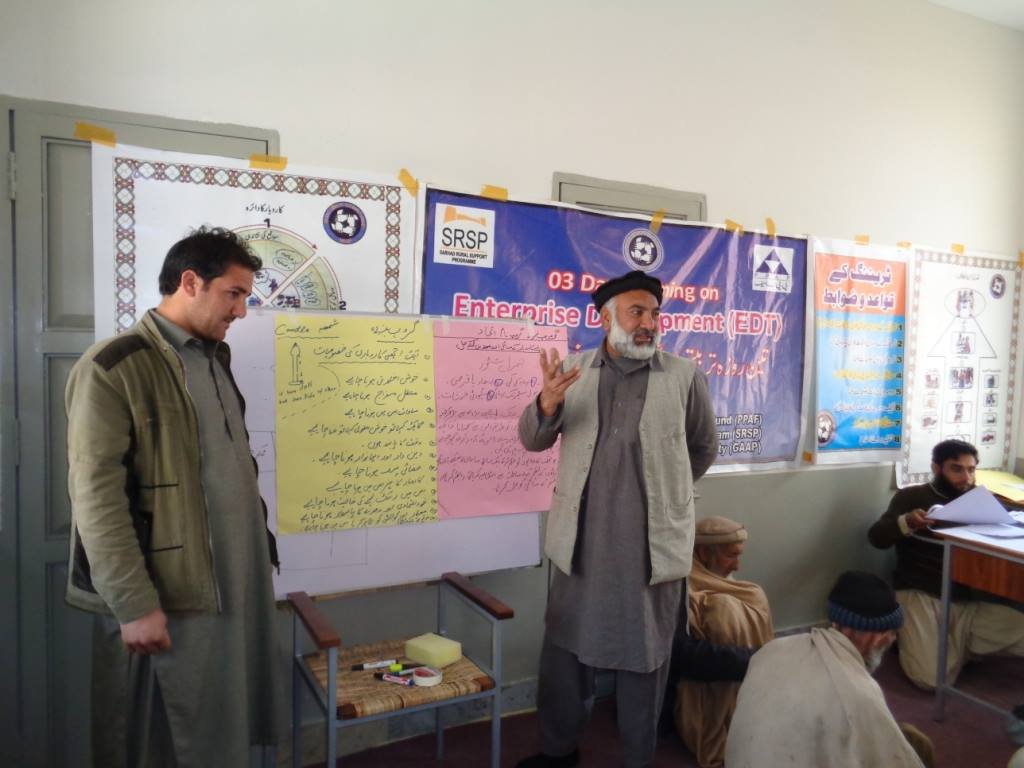
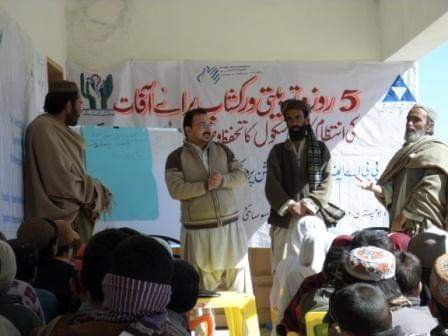
The first step of our approach to addressing development problems is to organize people into local organizations known as Community Organizations that are then able to identify and address local issues. We refer to this process as Social Mobilization. We assume that local people know best about local problems and that, in partnership with GAAP, they have the talents and willingness to plan and implement local development. Mobilized communities work as ‘platforms’ for local development, helping to bring together communities, knowledge and resources.
Depending on the local norms the CO members may be all men, all women, or, as happens in some places, ‘mixed’ COs, having both men and women members. Once formed, each CO elects a President. The GAAP staff and the CO members identify an Activist – an experienced local person who will take ideas forward – from amongst the CO members. In our support to the Community Organization we offer capacity building skills and awareness raising sessions to the CO Activists and/or office holders. Additionally, GAAP offers vocational skill training, micro-finance services, physical infrastructure development, and environmental and natural resource management. Awareness of women’s rights, and their right to participate in local development, are integral to GAAP’s work with community members.
Committees to support and supplement COs and VOs: GAAP encourages people to form Committees that assume responsibility for specific aspects of community life. Examples include Village Health Committees, School Management Committees and Sanitation Committees. The Social Mobilization Projects address the fact that in any social environment, new needs for information and action arise and organizations need support in order to mature and become more effective in response to changing circumstances.
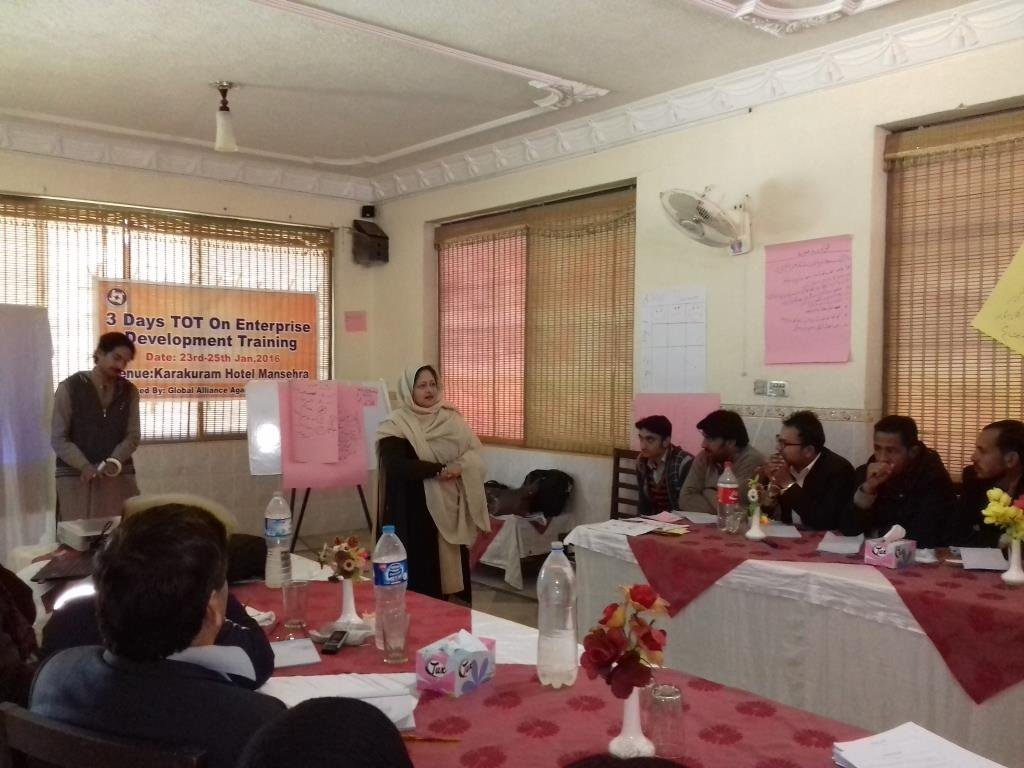
To improve the knowledge and awareness of the CO, VO and LSO members, workshops are being held on numerous rights-based issues, such as how to obtain a Computerized National Identity Card, how to register as a voter and how to register births and deaths. Other workshops have been held on women’s right to inheritance, rights in marriage and the need to ensure that marriages result in a registered Nikah Nama. Women’s rights in divorce and the terms of dissolution of marriage are also covered. Community institutions were also engaged to form School Management Committees that would increase primary level enrolment and reduce dropouts through campaigns. Workshops have also been held that teach people how to access social safety net programmes such as Zakat, Baitul Mal and the Benazir Income Support Programme.
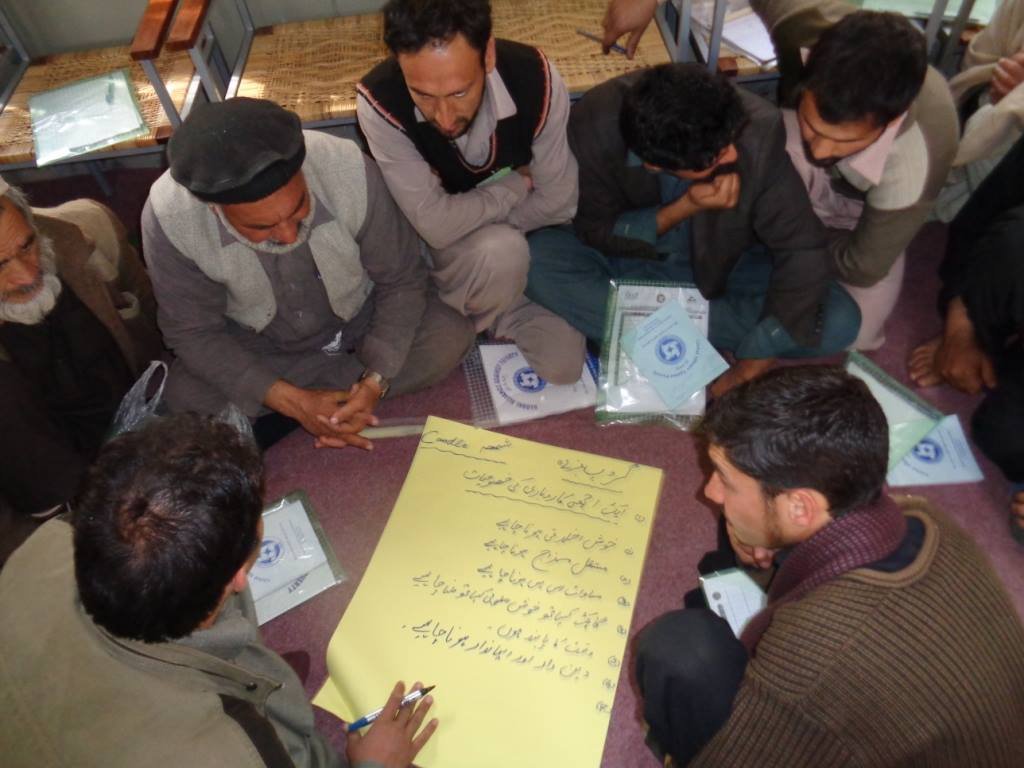
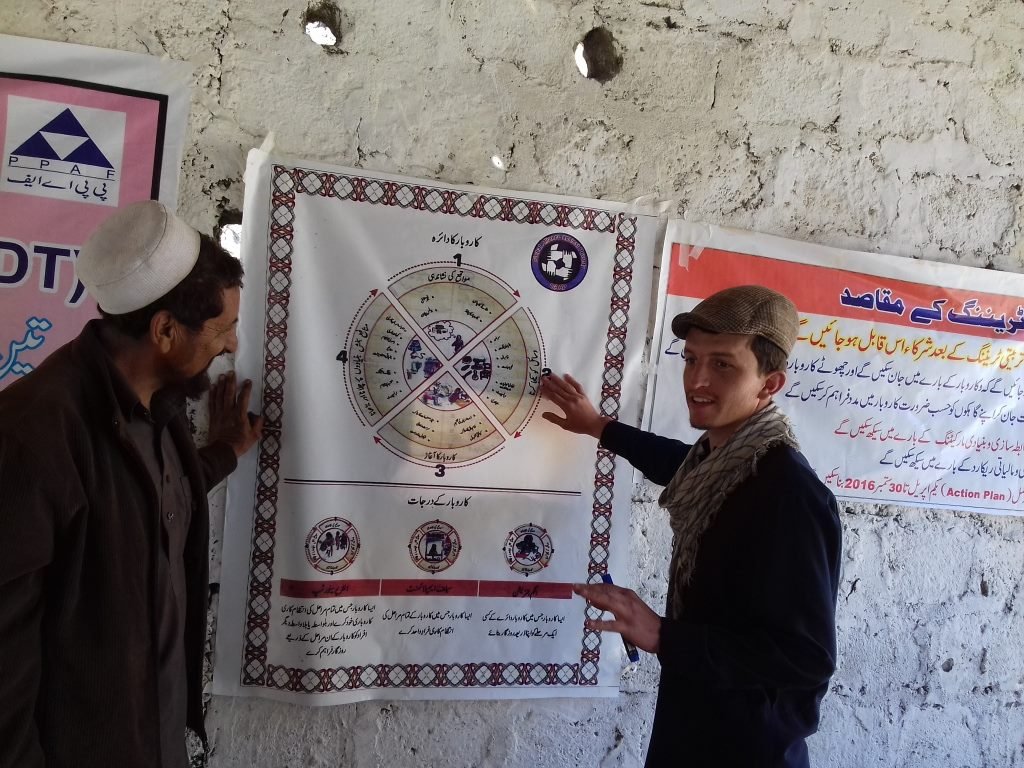
Introducing GAAP in a new community. When GAAP Social Organizers go to a new Union Council they engage people in a series of dialogues explaining how to improve the physical and social quality of life. These dialogues help to establish trust in GAAP and the Social Organizers. They also enable potential CO members to identify the socio-economic and infrastructural opportunities available in their communities. Every effort is made to include both men’s and women’s perspectives as the dialogues proceed and to ensure that the poorest community members are included. Once identified, the opportunities are grouped into sector-specific categories (for example, financial services, small scale engineering, health, education and social protection).
We sign a Terms of Partnership agreement with every CO, VO and LSO with which we work. This identifies the rights and responsibilities of the community members and GAAP. It is taken for granted that the poorest and most vulnerable members of the community have the same right as those who are better off to benefit from development activities. This may happen as a result of CO activities or in the course of specific projects focusing on the poorest community members.
Capacity Building for Effective Institutional Management in Communities: GAAP builds the capacities of the members of the COs, VOs and LSOs to establish links to various development programmes and projects that will benefit village residents. These links may be with the Government, local or national donors or local philanthropists. This process establishes the Community Organization, VO or LSO as a primary vehicle for the delivery of goods and services to the communities and ensures people’s active participation.
Don’t miss our future updates! Get Subscribed Today!